Hibiscus Flower Cultivation and Export Seminar in Nigeria
Nigeria is increasingly recognized as one of the largest producers and exporters of hibiscus flowers in the world. Popularly known as “zobo” locally, hibiscus flowers are valued for their use in beverages, herbal teas, food coloring, cosmetics, and pharmaceuticals. International markets, particularly in Mexico, the United States, Germany, and parts of Asia, have created a strong demand for dried hibiscus, making it a lucrative cash crop for Nigerian farmers and exporters.
Despite the high potential, many players in the value chain face challenges related to cultivation practices, post-harvest handling, quality standards, and international trade regulations. To bridge this gap, seminars and training programs on hibiscus flower cultivation and export are being organized across Nigeria.
These seminars provide farmers, processors, and entrepreneurs with the knowledge, skills, and networks required to participate effectively in this booming sector.
Why training on hibiscus cultivation and export is important
Hibiscus farming is profitable, but it is not without its technical and business complexities. Many farmers have entered the sector without adequate training, resulting in poor yields, contamination during drying, rejection at export terminals, and huge financial losses. Exporters also face difficulties navigating international requirements such as quality certifications, fumigation standards, and packaging protocols.
Seminars and training programs help participants understand the entire value chain — from planting and farm management to harvesting, processing, packaging, and shipping. With structured guidance, farmers reduce crop losses, exporters meet buyer specifications, and stakeholders gain confidence to invest in the business.
What participants gain from hibiscus seminars
Attending a hibiscus flower cultivation and export seminar in Nigeria equips participants with practical insights into the technical, commercial, and regulatory aspects of the industry. Farmers are introduced to best practices in land preparation, seed selection, and crop management that improve yields and ensure uniform quality. They also learn how to manage pests and diseases organically, how to harvest at the right stage, and how to dry flowers under hygienic conditions to meet export standards.
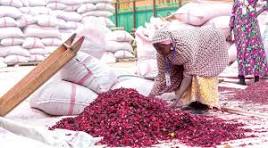
Beyond cultivation, these seminars devote attention to processing and quality assurance. Participants learn about cleaning, grading, and drying technologies that reduce contamination and maintain the vibrant red color demanded in international markets. Exporters are guided on how to meet international requirements such as HACCP, phytosanitary certifications, and fumigation protocols. Packaging and labeling requirements for different markets are also explained to avoid rejection at the border.
Another key outcome is exposure to the financial and marketing aspects of the business. Participants are trained on how to prepare feasibility studies, estimate production costs, and evaluate potential returns on investment. They are introduced to the dynamics of the global hibiscus trade, pricing trends, and how to build sustainable market linkages.
Networking opportunities with buyers, exporters, cooperatives, and input suppliers often emerge during these seminars, giving participants a head start in building partnerships that will support their ventures.
Who should attend hibiscus training programs
The seminars are designed for a wide audience across the agricultural and business ecosystem. Smallholder farmers who want to diversify their income and take advantage of export opportunities find the training particularly valuable. Agripreneurs and investors seeking new ventures discover hibiscus as a scalable business with strong international demand.
Exporters already in the trade benefit from updates on changing regulations and buyer requirements, while agricultural extension officers, input suppliers, and cooperative leaders enhance their ability to support farming communities. Even government agencies and financial institutions are often represented, since hibiscus cultivation ties into national agricultural development and export promotion agendas.
Training formats and delivery
Hibiscus flower cultivation and export seminars in Nigeria are offered in various formats depending on the needs of participants. Some are short workshops lasting one to three days, focused on practical field demonstrations and post-harvest handling. Others are intensive programs that run for one to two weeks, combining classroom theory with farm visits and processing site tours.
Increasingly, hybrid models are emerging where online sessions provide background knowledge, followed by physical demonstrations on farms and in processing facilities. Mentorship-based training is also popular, where experts guide participants through a full cultivation and export cycle, ensuring hands-on learning and real-world problem-solving.
Overcoming challenges in the hibiscus export value chain
One of the recurring challenges in Nigeria’s hibiscus export industry has been the issue of contamination, particularly with pests and aflatoxins. This has, in the past, led to temporary bans from key export destinations. Seminars provide farmers and exporters with preventive strategies, including the adoption of proper drying platforms, the use of clean storage facilities, and regular quality checks. Another challenge is the lack of access to reliable market information.
Training programs often include market intelligence briefings that explain pricing structures, demand cycles, and buyer preferences in major importing countries. By understanding these dynamics, exporters can time their sales and negotiate contracts more effectively.
Financing is another barrier that many hibiscus farmers face. Without adequate capital, they are unable to expand production or invest in proper processing equipment. Seminars often include sessions on agribusiness finance, where participants are introduced to funding options from banks, cooperatives, government initiatives, and international development programs. They are also trained on how to prepare bankable business plans that can attract investors and lenders.
The economic and social impact of hibiscus seminars
By equipping farmers and entrepreneurs with knowledge and skills, hibiscus training programs contribute to broader economic and social development in Nigeria. Increased production and higher quality standards boost export revenues, creating foreign exchange earnings for the country. Farmers experience higher incomes, which improves rural livelihoods and reduces poverty. Women and youth, who often participate actively in hibiscus farming and processing, benefit significantly from the empowerment and employment opportunities the sector provides. As more Nigerians embrace hibiscus cultivation and export, the industry strengthens its role in diversifying the economy away from oil dependence.
The future of hibiscus cultivation and export in Nigeria
With global demand for hibiscus projected to rise steadily due to its health benefits and use in natural products, Nigeria is well positioned to expand its share of the market.
However, growth will depend on the ability of farmers and exporters to meet international standards consistently. Training and seminars will therefore continue to play a central role in building capacity and ensuring competitiveness. As technology advances, participants can expect future seminars to introduce innovations in mechanized harvesting, improved drying systems, and blockchain-enabled traceability. These developments will further strengthen Nigeria’s position as a top global supplier of hibiscus.
The cultivation and export of hibiscus flowers in Nigeria present one of the most promising agribusiness opportunities available today.
However, success requires more than enthusiasm; it requires technical knowledge, business acumen, and compliance with international standards. Seminars and training programs on hibiscus cultivation and export provide exactly that.
They offer farmers and entrepreneurs the tools to grow high-quality crops, the skills to process them to export specifications, and the insights to navigate global markets profitably. For anyone looking to tap into the enormous potential of hibiscus in Nigeria, attending such seminars is not just an option but a critical first step toward building a sustainable and profitable agribusiness.