
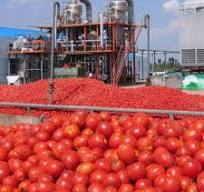
Training on Tomato Paste Production and Processing in Nigeria
Tomato paste production and processing has become one of the most promising agribusiness ventures in Nigeria, largely due to the country’s favorable climate for tomato cultivation and the rising demand for tomato-based products.
Nigeria is one of the largest producers of fresh tomatoes in Africa, yet a significant portion of the produce is lost every year due to poor storage, inadequate processing capacity, and inefficiencies across the value chain. To address these challenges and harness the economic potential, training on tomato paste production and processing has emerged as a vital tool for farmers, entrepreneurs, and investors interested in the agribusiness sector.
The Nigerian market presents a paradox: while local production of tomatoes is high, the country still spends billions of naira annually importing tomato paste from China and other countries. This creates an urgent need for capacity development and knowledge transfer in tomato paste processing to reduce post-harvest losses, encourage value addition, and improve local self-sufficiency.
A training program dedicated to tomato paste production not only teaches the technical aspects of processing but also focuses on business development, quality control, and regulatory compliance, which are essential for long-term sustainability.
One of the core areas covered in such training is the cultivation and supply chain management of tomatoes. Participants are guided on the types of tomatoes most suitable for processing, such as Roma varieties, which have thicker pulp and lower water content compared to fresh-market tomatoes. They are taught modern agronomic practices that ensure high yields and disease resistance.
Beyond cultivation, trainees learn about efficient harvesting, sorting, and grading techniques that ensure only the best quality tomatoes go into the production process. This knowledge is crucial because the quality of raw materials directly influences the final product, and poor handling can compromise both taste and safety.
Another major component of tomato paste training is the technical aspect of processing itself. This involves a step-by-step understanding of how fresh tomatoes are transformed into paste through washing, blanching, pulping, concentrating, and packaging. Training programs often include practical demonstrations with modern processing equipment such as evaporators, pulpers, and aseptic packaging machines.
Entrepreneurs and participants are introduced to different scales of operation—from small-scale manual systems suitable for local communities to fully automated industrial plants that can produce paste for local and export markets. This flexibility allows participants to choose the production model that matches their budget and market goals.
Quality assurance and food safety are emphasized during training. Since tomato paste is a food product intended for mass consumption, strict adherence to hygiene standards and regulatory requirements is essential. Trainees are introduced to Hazard Analysis Critical Control Point (HACCP) systems, Good Manufacturing Practices (GMP), and the standards set by regulatory bodies such as the National Agency for Food and Drug Administration and Control (NAFDAC) and the Standards Organisation of Nigeria (SON).
Learning how to meet these requirements ensures that locally processed tomato paste can compete with imported products in terms of safety, quality, and shelf life.
Marketing and business development also form a central part of tomato paste production training. Participants are equipped with strategies to penetrate the Nigerian market, which is already familiar with imported brands. They are trained to identify gaps in the market, develop branding and packaging that appeal to local consumers, and explore distribution channels that range from local supermarkets to bulk supply for food service industries. Additionally, trainees learn about export opportunities within Africa under the African Continental Free Trade Area (AfCFTA) framework, which opens up wider regional markets for Nigerian-made tomato paste.
Financial literacy and investment planning are other aspects that make the training comprehensive. Many entrepreneurs with good ideas fail because they lack knowledge about financial management, cost analysis, and investment planning. Training in tomato paste production provides participants with tools to calculate their production costs, determine selling prices, forecast profits, and develop business plans that can attract investors and bank financing. With Nigeria’s increasing interest in agribusiness financing, knowing how to present a viable business plan can make the difference between success and failure.
Another important focus of the training is addressing the persistent problem of post-harvest losses. In Nigeria, over 40% of tomatoes produced annually are wasted due to poor storage and transport facilities. Training programs highlight the importance of cold chain systems, efficient logistics, and immediate processing after harvest. By developing clusters of tomato farming communities linked directly to processing plants, post-harvest losses can be drastically reduced, while farmers also get better prices for their produce. This integrated approach helps strengthen the tomato value chain and ensures that both farmers and processors benefit.
The seminar or training also emphasizes innovation and technology adoption. Modern processing techniques such as aseptic packaging, which allows tomato paste to be stored for longer periods without refrigeration, are introduced. Participants are also encouraged to explore solar-powered dryers and other energy-efficient systems that reduce the cost of processing. The incorporation of renewable energy is particularly important in Nigeria, where unreliable power supply can hinder operations. Through hands-on training, entrepreneurs understand how to adapt technology to local conditions and make their operations more sustainable.
Beyond the technical and business aspects, participants also gain insights into the broader policy and investment environment. They are introduced to government policies and incentives designed to support local food processing industries. For instance, Nigeria has placed restrictions on the importation of tomato paste to encourage local production, and government agencies provide grants, loans, and tax incentives to agribusiness investors.
Training programs often invite policy experts and industry stakeholders to provide updates and insights, giving participants a clearer picture of the opportunities and challenges within the sector.
Networking is another benefit of participating in training on tomato paste production. These seminars bring together diverse stakeholders, including farmers, entrepreneurs, equipment suppliers, financial institutions, policymakers, and industry experts. By connecting with others in the ecosystem, participants are better positioned to form partnerships, access resources, and create synergies that improve their chances of success. Many successful tomato paste businesses in Nigeria began with partnerships forged during training programs and seminars.
Ultimately, the importance of training on tomato paste production in Nigeria cannot be overstated. It addresses a critical national need to reduce food imports, save foreign exchange, create jobs, and support rural farming communities. With the right skills, entrepreneurs can establish profitable processing businesses that meet local demand while also contributing to the broader goal of food security.
For Nigeria, which spends billions annually importing tomato paste despite being a major producer of fresh tomatoes, such training provides a practical solution that combines knowledge transfer, technology adoption, and business development.
As more individuals embrace these training opportunities, the tomato paste industry in Nigeria is expected to grow significantly. Local production will not only reduce the dependency on imports but will also stimulate economic growth, enhance agricultural productivity, and encourage value addition across the supply chain. For farmers, it means better prices and reduced losses. For entrepreneurs, it means a viable and profitable business opportunity. For the nation, it represents progress toward industrialization and food self-sufficiency.
In conclusion, training on tomato paste production and processing in Nigeria offers a unique blend of technical expertise, business knowledge, and policy awareness that empowers participants to turn opportunities into successful enterprises. By learning best practices in cultivation, processing, quality control, marketing, and investment planning, stakeholders across the tomato value chain can contribute to building a sustainable and competitive industry.
With the right training, Nigeria has the potential not only to meet local demand but also to become a key player in the regional and global tomato paste market.