How to Choose the Right Course Path: Academic vs. Vocational vs. Personal Development
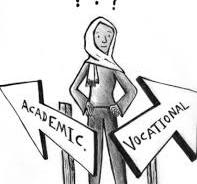
Choosing the right course often feels like standing at a crossroads, with multiple paths leading in different directions. Many learners in Nigeria today wonder whether to invest in an academic program, learn a hands-on vocational trade, or focus on personal development. Each of these paths comes with its own advantages and challenges, and the decision you make can significantly shape your future.
Academic courses are the traditional route, usually offered by universities and higher institutions. They provide structured knowledge in fields such as medicine, engineering, law, and the social sciences. Their strength lies in the recognition and credibility of the degrees or diplomas earned, which serve as passports to professional careers.
However, academic study can be time-consuming, costly, and heavily focused on theory. For many graduates, the challenge has been translating these qualifications into immediate employment opportunities, especially in a competitive job market.
Vocational courses, on the other hand, are designed for hands-on training and direct application. They cover areas like plumbing, welding, fashion design, solar installation, catering, ICT, and hairdressing. Unlike academic programs, vocational training is often shorter, more affordable, and geared toward immediate employability. Someone who completes training in tailoring or solar energy systems can begin earning almost immediately, either by securing a job or starting a business.
The main limitation is that vocational skills tend to be very specific. While this makes you highly employable in that field, it may also restrict career flexibility unless you combine your training with other skill sets.
Personal development courses stand apart because they focus less on technical expertise and more on self-improvement and soft skills. Training in leadership, communication, financial literacy, public speaking, or time management helps individuals grow in confidence and effectiveness. These skills are not tied to one industry but are highly transferable across professions. Employers increasingly value soft skills as much as technical ability, and entrepreneurs also find them essential for scaling businesses.
The challenge with personal development, however, is that the benefits are not always as immediately measurable as acquiring a trade or earning a degree. They tend to complement rather than replace other forms of training.
The choice of which path to follow often depends on your career goals, the realities of the job market, your learning style, and the resources available to you. Someone who dreams of becoming a doctor or lawyer has little choice but to take the academic route. A young person who wants to set up a thriving tailoring shop or solar energy business is better served by vocational training. For someone looking to advance into leadership positions or entrepreneurship, personal development courses can make a huge difference in performance and confidence.
The Nigerian market is also a major factor to consider. Traditional degree programs continue to dominate for established professions, but in many sectors, job saturation makes them less secure as career guarantees. Vocational skills like ICT, renewable energy, and construction-related trades are increasingly sought after and provide quicker entry into income-generating opportunities. At the same time, personal development skills are becoming indispensable because they give learners the adaptability and interpersonal edge employers and clients expect.
It is also important to think about your learning style. Some people thrive in structured, theory-heavy environments and will naturally feel more at home in an academic program. Others are practical, hands-on learners who gain more satisfaction and faster results from vocational training. Still others prefer flexible learning focused on reflection, self-improvement, and personal growth, making personal development courses more appealing. Your personal style of learning should influence the path you choose, because motivation and engagement are key to success.
Time and resources matter as well. Academic programs typically span several years and require heavy financial investment. Vocational training is often more affordable and shorter in duration, while personal development courses can usually be completed online in a matter of weeks or days. If you are unsure of which path to take, starting with short courses can be a good way to explore your options without making a long-term commitment.
In reality, you do not always have to choose only one path. Many of the most successful learners and professionals in Nigeria today combine academic qualifications with vocational skills and personal development training. An engineering graduate, for example, may decide to learn solar installation to boost employability.
A fashion entrepreneur may invest in leadership and communication training to expand her business. A business graduate may acquire digital marketing skills and pair them with negotiation workshops to create a competitive edge. By blending these paths, learners create a well-rounded portfolio of knowledge, practical skills, and personal effectiveness.
The stories of real learners illustrate this balance. A law student may complete an academic program while also taking public speaking training to improve advocacy skills. A young caterer may start with a vocational course and later add business management training to grow into a successful entrepreneur.
A graduate in accounting may strengthen her employability by studying digital marketing while also taking leadership workshops to position herself for managerial roles. Each of these examples shows how combining academic, vocational, and personal development paths creates resilience and versatility.
Ultimately, choosing the right course path is not about identifying the single “best” option but about finding the right fit for your goals, resources, and aspirations. Academic courses give prestige and structured knowledge, vocational courses offer direct employability and entrepreneurial opportunities, and personal development equips you with the soft skills to thrive in any environment.
Platforms like Learnora.ng make it easier to explore all these options in one place. By reflecting on your goals, researching the market, and taking advantage of diverse training opportunities, you can choose the path—or combination of paths—that helps you grow, succeed, and create the future you want.