Subsea Systems, Processes and Topside Interface for Oil and Gas Production Course in Nigeria
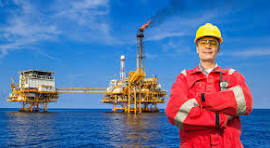
The oil and gas industry is increasingly dependent on offshore exploration and production to meet global energy needs. In Nigeria, deepwater and ultra-deepwater fields are central to the nation’s energy future, and the ability to manage subsea systems effectively has become a critical skill for engineers and professionals working in the sector. Subsea technology allows hydrocarbons to be extracted from beneath the seabed and transported to topside facilities for processing, making it a vital link in offshore production.
The Subsea Systems, Processes and Topside Interface for Oil and Gas Production Course in Nigeria, available on Leanora.ng, provides an in-depth understanding of how subsea equipment, processes, and topside operations work together to ensure safe, efficient, and sustainable oil and gas production.
This course introduces participants to the fundamentals of subsea systems, including the design and function of subsea trees, manifolds, pipelines, risers, and control systems. It explores how these systems are integrated into the broader production chain, from the wellhead on the seabed to the topside facilities where hydrocarbons are processed and exported.
Participants are guided through the critical processes that enable subsea systems to operate reliably under extreme conditions of pressure, temperature, and ocean currents, while also learning about the interfaces that connect subsea equipment to topside infrastructure such as floating production units, platforms, and processing plants.
A key part of the training is understanding the operational challenges and solutions in subsea and topside integration. Offshore oil and gas production environments are complex, and the failure of a subsea system can result in significant downtime, environmental damage, or financial loss. By examining real-world case studies and operational scenarios, learners gain practical insights into how subsea processes are monitored, maintained, and optimized, as well as how topside teams coordinate with subsea specialists to ensure seamless production flow.
Nigeria’s offshore industry has seen significant investment in subsea technology over the past two decades, with major projects relying heavily on subsea-to-topside integration.
This course situates global best practices within the Nigerian context, giving participants the ability to address local challenges such as infrastructure limitations, environmental concerns, and the need for cost-efficient production strategies. It also emphasizes safety and environmental protection, highlighting how proper system design, monitoring, and maintenance reduce risks and ensure compliance with international standards.
The course is designed for a wide range of professionals, including subsea engineers, offshore operations managers, topside facility engineers, project managers, HSE officers, and young graduates aspiring to work in the offshore oil and gas industry.
It equips them with technical knowledge as well as the problem-solving skills required to work in multidisciplinary teams where subsea and topside operations must align to achieve production targets. By the end of the training, participants will have a clearer understanding of subsea-to-topside interfaces and the role they play in optimizing oil and gas production.
For organizations, investing in this training builds internal capacity to manage the complex interplay between subsea and topside systems. It reduces reliance on external consultants, improves project delivery timelines, minimizes costly downtimes, and enhances overall asset integrity. In a highly competitive industry where efficiency and safety are paramount, having staff who are trained in subsea and topside integration gives companies a strong competitive advantage.
Delivered on Leanora.ng, this course provides learners with access to expert trainers, flexible learning schedules, and industry-recognized certification that adds significant value to their career profiles. Leanora.ng also supports trainers by offering a free platform to showcase their expertise and reach a broader audience of professionals seeking growth in oil and gas operations.
In conclusion, subsea systems are the backbone of offshore oil and gas production, but they cannot function effectively without seamless integration with topside facilities.
The Subsea Systems, Processes and Topside Interface for Oil and Gas Production Course in Nigeria equips participants with the knowledge and skills required to manage these complex operations successfully. Learners can enroll today on Leanora.ng to gain access to this and many other specialized industry courses, while trainers can list their programs for free and connect with Nigeria’s growing community of oil and gas professionals.