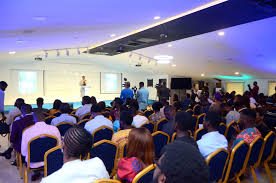

Trainings, Seminars and Workshops on Finance for Engineers, Project and Technical Professionals in Nigeria
In today’s competitive business environment, technical expertise alone is no longer enough for engineers, project managers, and other technical professionals to thrive. Organizations increasingly require professionals who can combine their technical knowledge with strong financial acumen to ensure projects are delivered on time, within budget, and with sustainable returns.
This is where the Trainings, Seminars and Workshops on Finance for Engineers, Project and Technical Professionals in Nigeria, available on Leanora.ng, come in—bridging the gap between technical excellence and financial management.
These specialized programs introduce participants to the fundamental principles of finance tailored for non-financial professionals. Engineers and project leaders often manage complex projects with significant financial implications, yet many lack the financial literacy to evaluate costs, justify budgets, or interpret financial reports effectively.
The training provides clarity by breaking down key concepts such as financial statements, cash flow analysis, cost control, budgeting, return on investment, and project financing into practical terms relevant to technical roles.
The courses go beyond theory, focusing on real-world applications that align with engineering and project management environments. Participants learn how to develop accurate cost estimates, manage project budgets, analyze financial risks, and make informed decisions that align with organizational objectives. The program also covers capital expenditure planning, cost-benefit analysis, and lifecycle costing—tools that are particularly vital for engineers and project managers working on infrastructure, oil and gas, manufacturing, and technology projects in Nigeria.
Workshops are designed to be interactive, incorporating case studies, simulations, and group exercises that mirror the financial challenges encountered in technical and project-based roles. This practical approach ensures that learners not only understand the numbers but also gain the confidence to communicate financial insights effectively to stakeholders, executives, and clients.
An important element of these trainings is the emphasis on collaboration between technical and financial teams. By equipping engineers and technical professionals with financial knowledge, the training fosters stronger cross-functional cooperation and enhances decision-making at every stage of project delivery. Participants leave with the ability to evaluate financial implications of design choices, procurement strategies, and operational decisions—ultimately contributing to improved project performance and organizational profitability.
These programs are particularly valuable for engineers, project managers, technical specialists, operations managers, and anyone responsible for technical decision-making with financial consequences. For organizations, enrolling staff in these trainings builds capacity, reduces project cost overruns, and ensures greater accountability in resource allocation.
Through Leanora.ng, participants can access expert-led trainings, seminars, and workshops that are tailored to Nigeria’s unique business and project management environment. Trainers and institutions also benefit from the platform by listing their finance-focused courses for free, making them accessible to a wide network of learners and organizations across the country.
In conclusion, financial literacy is no longer optional for engineers, project managers, and technical professionals—it is an essential skill for career advancement and organizational success.
The Trainings, Seminars and Workshops on Finance for Engineers, Project and Technical Professionals in Nigeria provide the perfect opportunity to gain the financial knowledge and tools necessary to complement technical expertise. Interested participants can enroll today through Leanora.ng, while trainers are encouraged to list their finance-related training programs at no cost.